Heat pumps are one of the key solutions for reaching EU decarbonisation goals. Our case study shows that a Daikin heat pump is 2-24 times less carbon intensive, helping to save from 0.2 to 2 tons of CO2-equivalent (C02-eq is the standard metric measure to compare the global warming potential of various greenhouse gases) during the use phase every year (depending on the emission factor - EF - of each country’s electricity grid).
The role of heat pumps in decarbonisation
Heat pumps are vital for the EU’s decarbonisation, offering a more energy-efficient and environmentally friendly heating solution compared to traditional fossil fuel-based systems. The European Heat Pump Market and Statistics Report 2023 highlights that the heat pump stock in 2022 alone contributed to a reduction of 52.52 Mt of greenhouse gas emissions. Globally, adopting heat pumps instead of conventional boilers and furnaces could reduce annual CO2 emissions by 3 gigatons.
Support for EU regulations
Heat pumps are key to the EU’s clean energy transition and achieving carbon neutrality by 2050. According to a 2022 report from the International Energy Agency, heat pumps could reduce Europe’s gas demand for building heating by at least 21 billion cubic metres by 2030. The EU Heat Pump Action Plan aims to install at least 10 million additional heat pumps by 2027, supported by various EU policy initiatives like the Renovation Wave Strategy, Renewable Energy Directive (RED), and Energy Efficiency Directive (EED).
Life cycle assessment (LCA) of heat pumps
To understand the carbon footprint benefits of heat pumps compared to gas-powered heating technologies, it is essential to perform a life cycle assessment (LCA). An LCA evaluates a product’s full life cycle—from resource extraction to production, use, recycling, and disposal—providing a comprehensive view of its environmental impact.
Since 2021, Daikin has conducted cradle-to-grave LCAs for heat pump products, assessing their environmental impacts from manufacturing to disposal. Daikin's LCA is verified by an independent third party and presented as an Environmental Product Declaration (EPD), which offers an independently verified summary of a product's environmental impact throughout its life cycle. There are two main types of EPDs: industry-wide and product-specific. EPDs are increasingly mandated by national regulations.
Case study: Carbon footprint of Daikin heat pumps vs. gas boilers
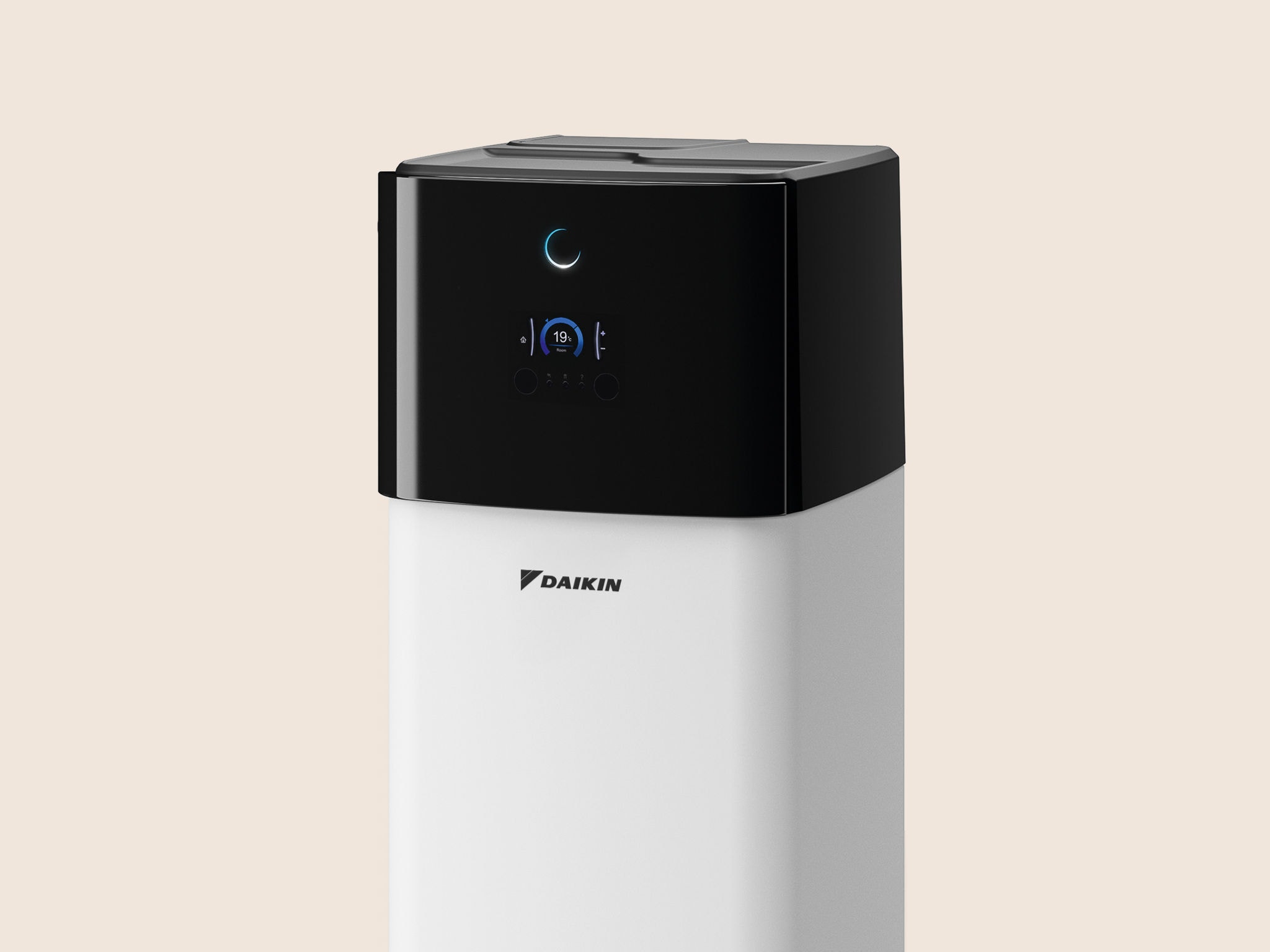
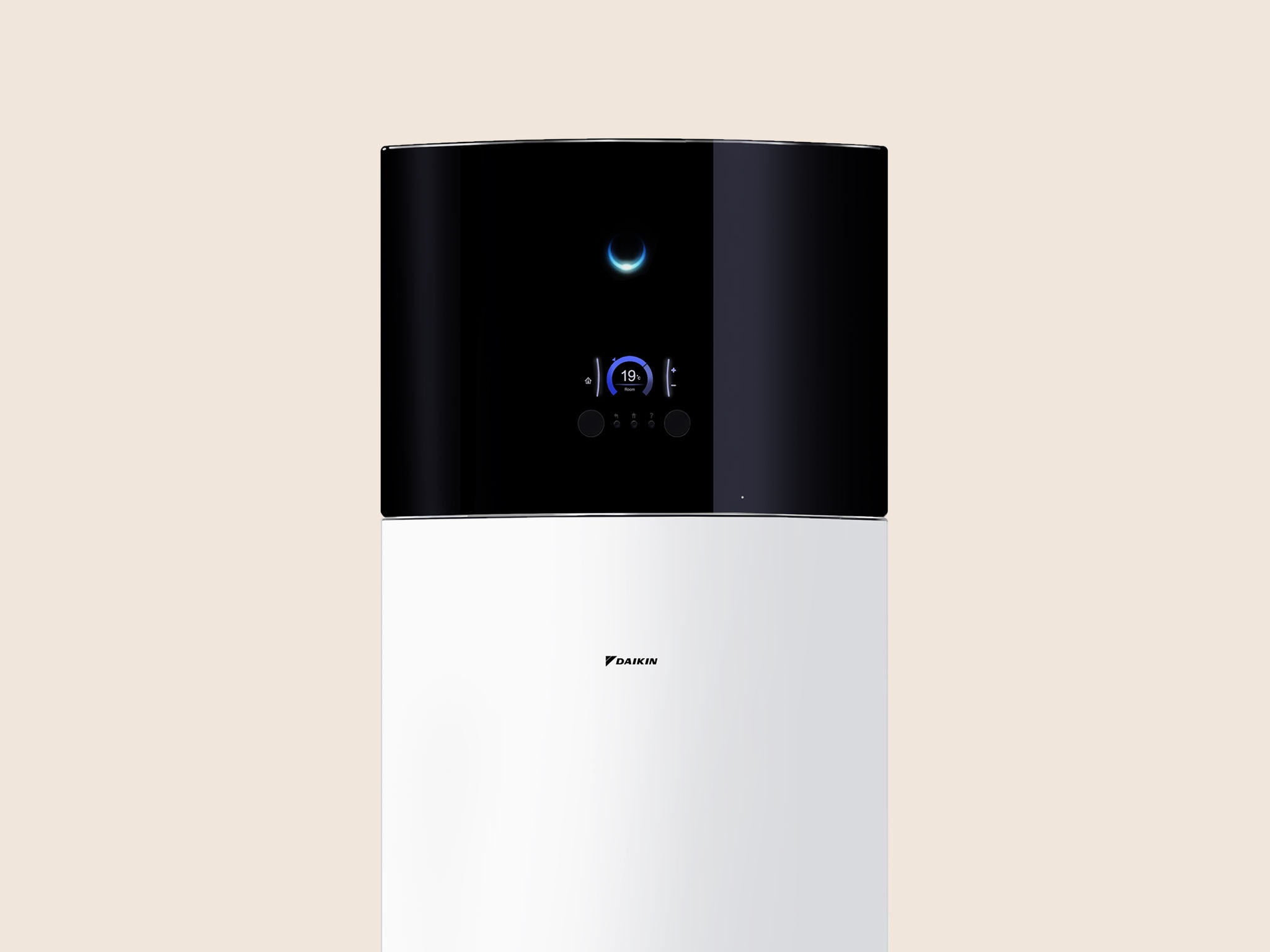
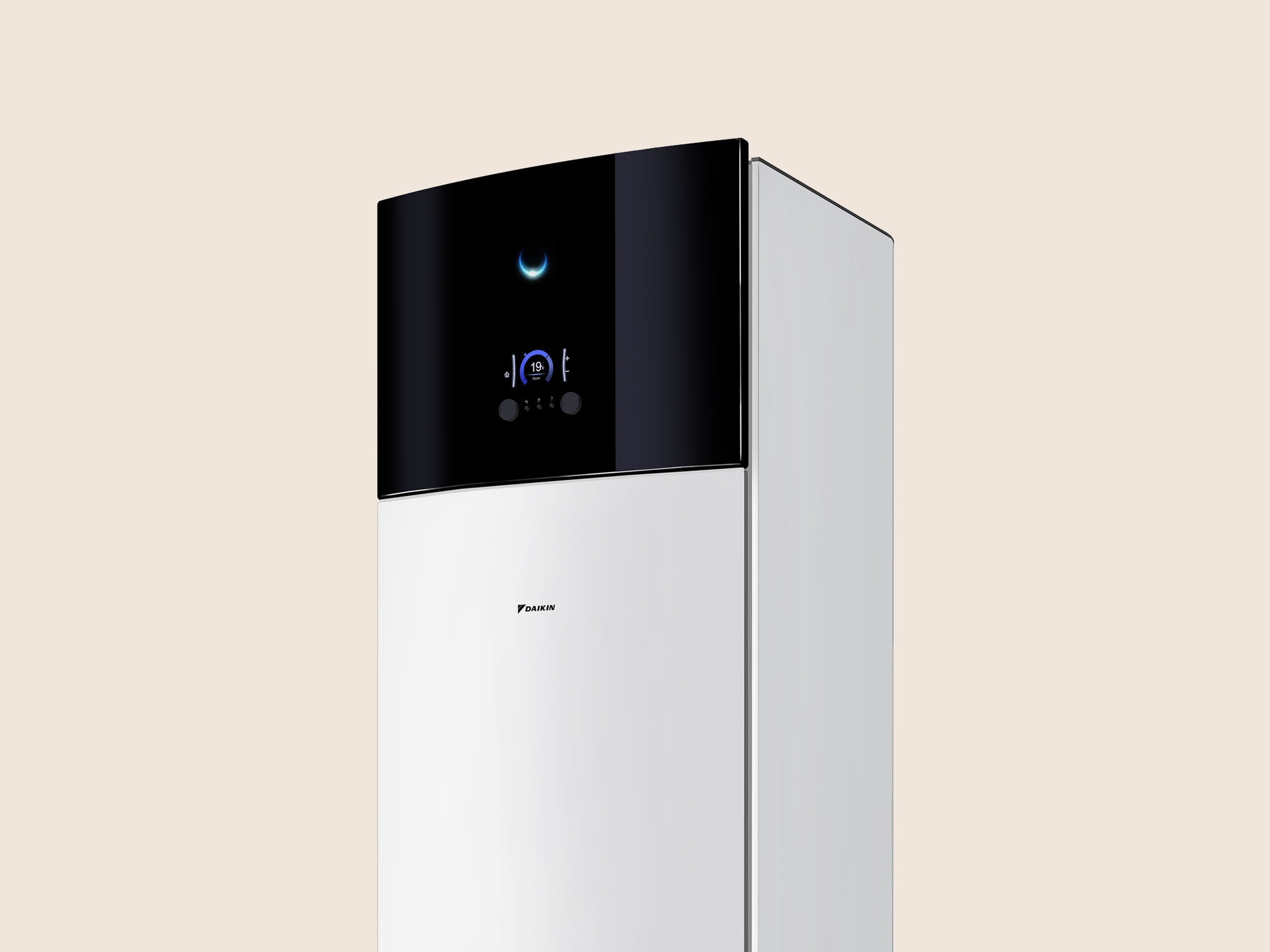
This case study compares the Daikin Altherma 3 R 180L (an air-to-water heat pump) with a highly efficient gas boiler (90% efficiency).
Whole life carbon
Whole life carbon (WLC) refers to the total carbon footprint of a product throughout its existence, encompassing both operational and embodied carbon. The total global warming potential (GWP) of a Daikin heat pump is nearly eight times lower than that of a gas boiler.
Operational carbon
Operational carbon emissions are those associated with the ongoing use of a product (the use phase). In this study, operational emissions from the gas boiler are almost ten times higher than those from the heat pump. The energy usage was calculated for France.
Embodied carbon
Embodied carbon refers to the emissions produced during the extraction, manufacturing, transportation, construction, maintenance, repair, and disposal stages of a product or building. The Daikin heat pump has a higher embodied carbon compared to the gas boiler, primarily due to higher emissions during the manufacturing and disposal stages.
Heat pumps result in significantly lower CO2 emissions
Replacing a gas boiler with a heat pump can result in significant CO2 emission reductions in typical single-family homes across European countries. The carbon footprint variations of the heat pump during its use phase were measured in different countries for a typical medium-sized household of 10.000 kWh annual energy consumption - representative of the new build market.
In Spain, the following results were found: a Daikin heat pump saves 1,852 kg of CO2 annually and is six times more carbon-efficient than a gas boiler.
Yearly emissions from the use of heat pumps are 2-24 times lower than emissions from gas boiler providing the same air and water heating and cooling for the household in all the countries studied. Since the EF of electricity is only expected to decrease within the near and long-term future due to the investments in renewable energy by the EU and UK, heat pumps will also continue to have less use phase emissions, therefore, helping them to achieve their climate goals.
In conclusion, heat pumps are a ready-to-use climate-positive solution with far-reaching environmental benefits compared to traditional gas boilers.
Our most popular air-to-water heat pumps

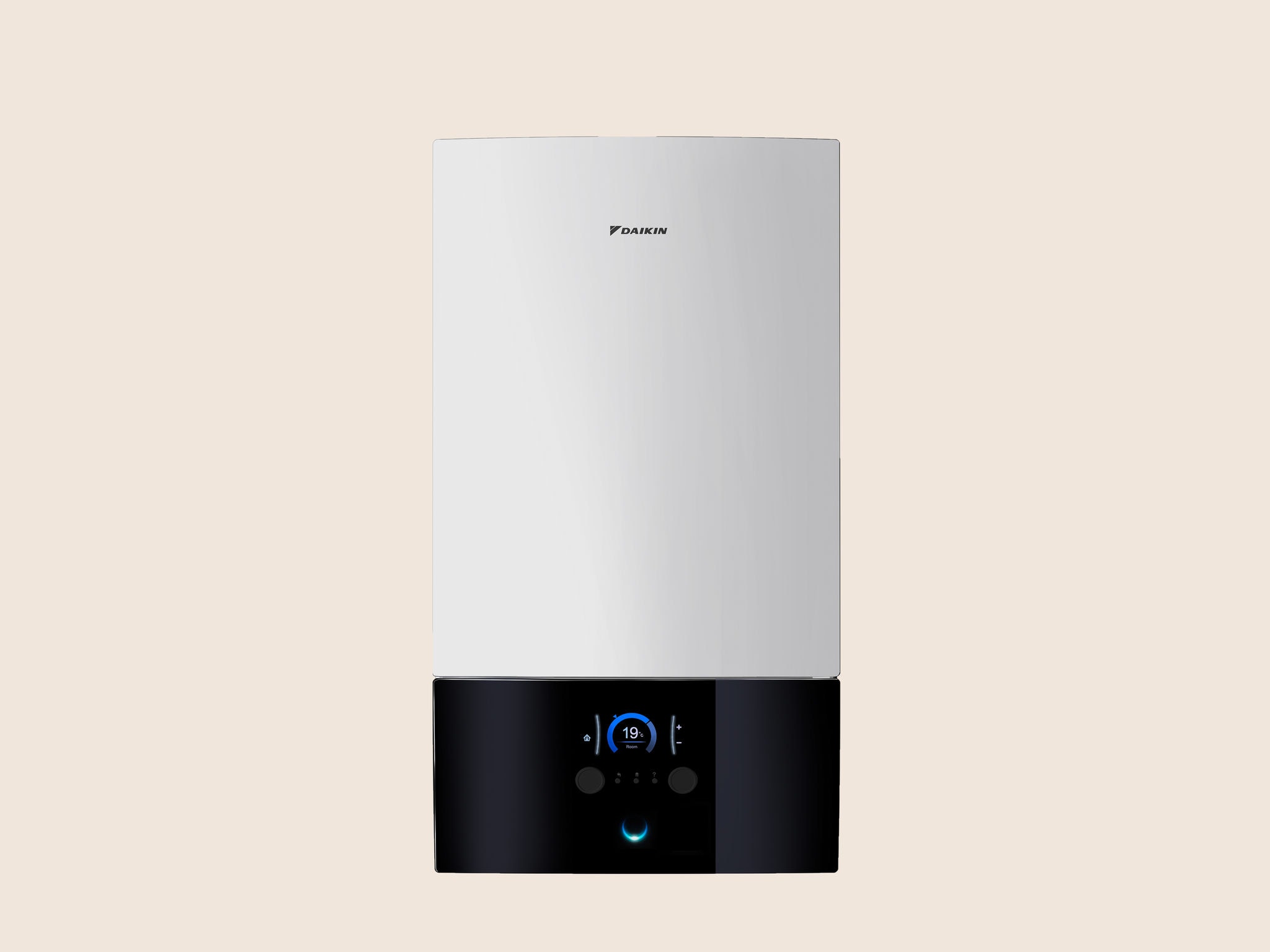
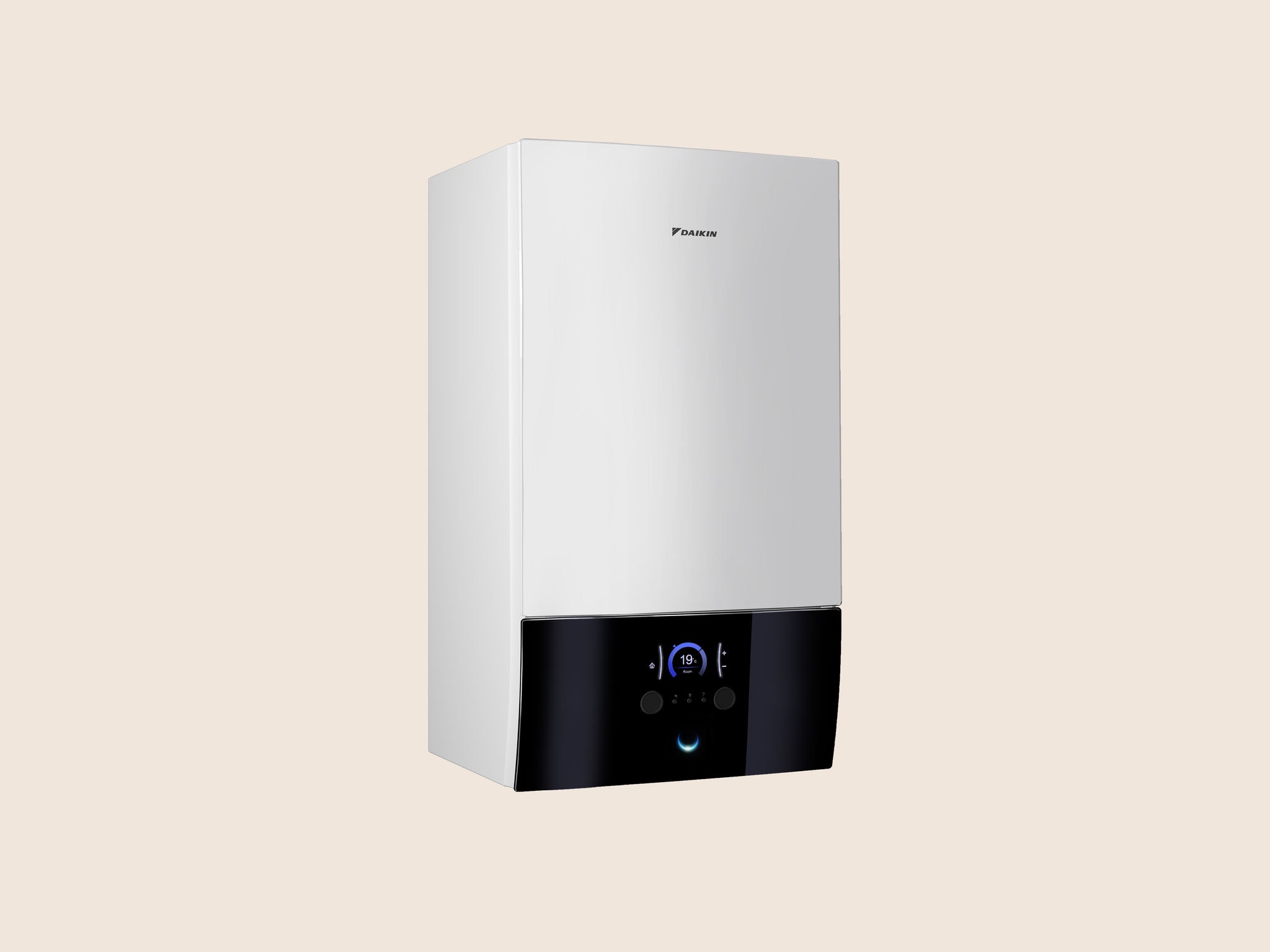

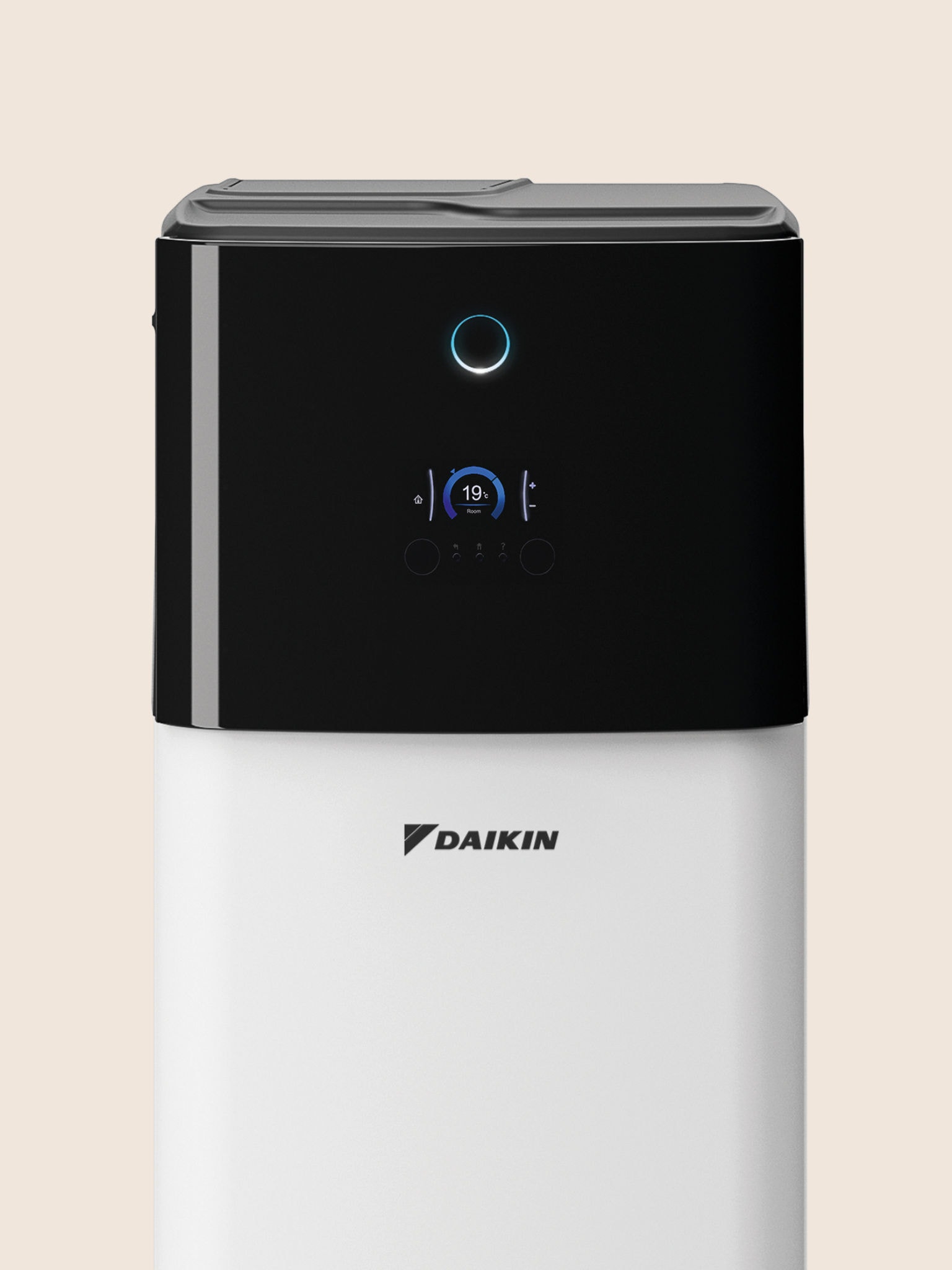
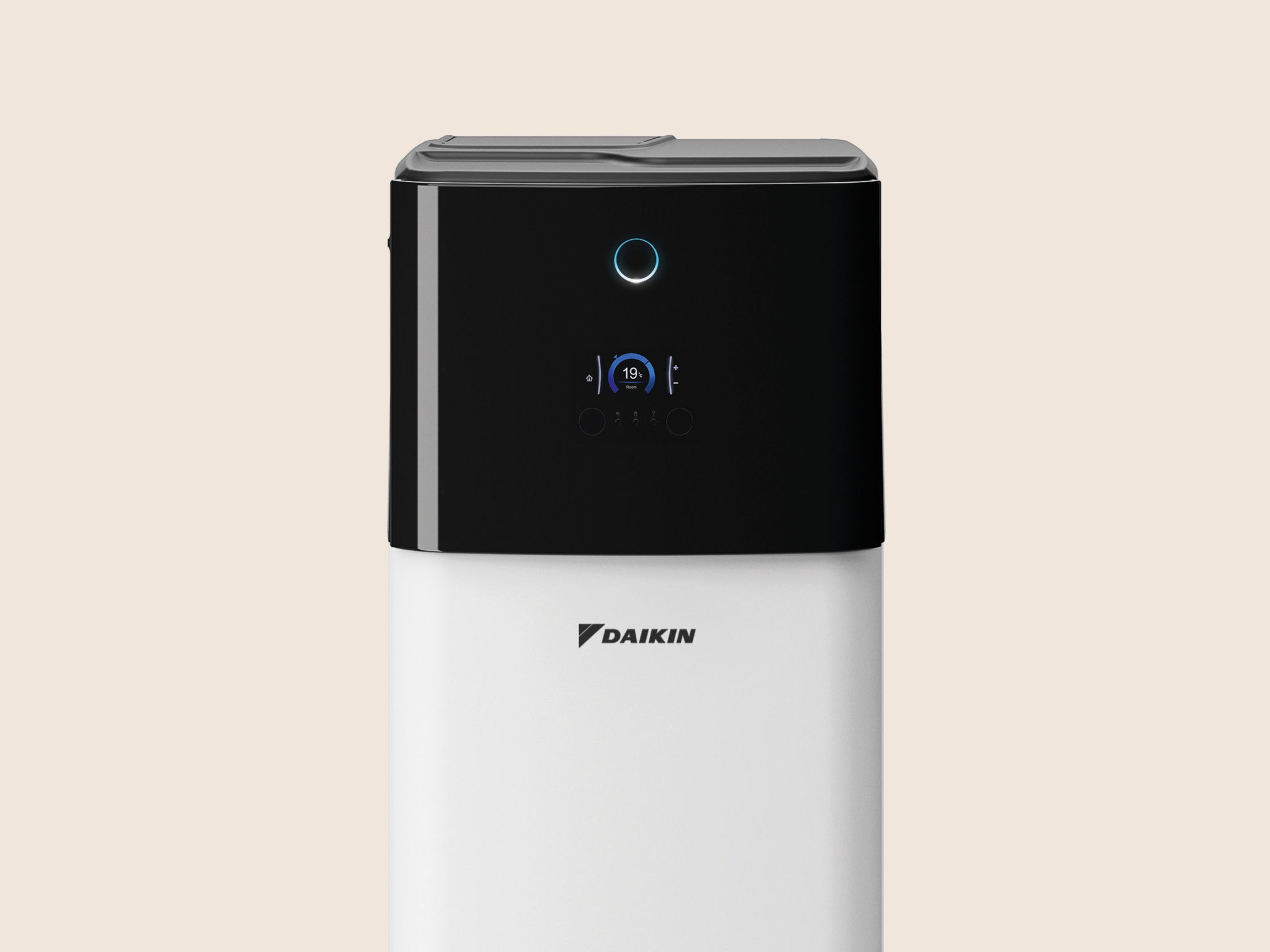



Comparar modelos (1)
Comparar modelos
Colores
Colores
Compare
Want to discover the full range of air-to-water heat pumps
Check out our full range and find the model best suiting your needs and interior
More information about air-to-water heat pumps
Find the answers to all the questions you might have about air-to-water heat pumps and how they can work for you
Yes, heat pumps can connect to either old or new radiators.
If you already have radiators in your home, high-temperature heat pumps or hybrid heat pumps (if you’re replacing a gas boiler) can easily connect to them and use existing piping without the need to replace the radiators or carrying out additional works.
The typical lifespan of a heat pump is generally between 15 and 20 years, though this depends on a number of factors. For example, maintenance. Although heat pumps are a low-maintenance solution, an annual check-up by your installer or service partner will help maximise its lifespan.
Yes, heat pumps can be used for cooling, but this depends on the type of emitters you have.
For example, the ideal emitter for cooling with low- or high-temperature heat pumps is a heat pump convector (also known as a fan coil unit). This works similarly to a traditional radiator with the added benefit that it can both heat and cool a room.
Some hybrid heat pumps can connect to air-to-air heat pump (also known as air conditioners), which are another popular heating and cooling solution.
Most heat pumps usually come with an indoor and an outdoor unit. Each unit produces sound when in operation, this sound is generally measured in dBA and these levels range from a scale of 0 dBA to 140 dBA.
When looking at sound levels you will also see specifications given for sound power level and sound pressure level.
Sound power level is the sound level measured directly at the source.
Sound pressure level is the sound level measured at a specified distance (usually 1.5 - 2 metres) from the source.
The indoor units of Daikin heat pumps generally produce a sound pressure level of about 30dBA, which is comparable to the sound of a person whispering.
Outdoor units, since they come in a bigger variety of sizes, range in sound pressure levels between 40dBA and 62 dBA, which are comparable to the sounds of birds a chirping and people having a conversation respectively.
Across Europe, different countries have different regulations and incentives on national and regional level to support the purchase and installation of a heat pump.
As each will have their own schemes and eligibility criteria, we advice you to consult your chosen Daikin installer, or your government's website, for more information.
You can get advice on which type of heat pump is best suited to your home from a Daikin installer, staff at the manufacturer’s flagship store, or consult our residential solutions navigator.
The price of installing a heat pump varies depending on the type of heat pump you choose and the country you live in.
Other factors that can affect the price are renovation or additional building works (such as insulation) that need to carried out, plus your installer. Different installers will have different prices according to their expertise and experience.
Heat pumps are not very demanding. We advise scheduling an annual maintenance appointment with your installer or service provider to make sure your pump keeps working as efficiently as possible. A typical service would include a number of standard checks, as well as a thorough cleaning of the unit and filters.
Curious to learn all about air-to-water heat pumps?
Read the full story about air-to-water heat pumps and make an informed decision
Learn more about heat pumps
We've selected some informative and inspirational articles for you to learn more about how Daikin can help you



Discover more home solutions
At Daikin, we believe that a house becomes a home through comfort, care, and the joy of shared moments. Discover our comfort solutions for your home.